Test automation and operational tools for software teams.
Quality before automation
Define critical flows, risk areas and the right coverage before automation. I identify what should be automated first and shape the scope around product risk and release confidence.
Automated coverage for critical product flows
Build reliable automated coverage across web applications, APIs and end-to-end workflows — from individual scenarios to complete regression suites.
Automation built to keep running
Design and evolve the infrastructure around the tests — reusable architecture, execution, reporting and CI/CD — so automation remains stable as the product changes.
When tests alone aren’t enough
Build validation and investigation tools that connect APIs, system data and logs to help teams understand complex failures and workflows.
Where automation pays off first
Risk
Coverage
High risk, low coverage — automated first
Critical flows, automated
SignupPass
CheckoutPass
PaymentsFail
SearchPass
Every change — failures land on the flow
Execution & reporting
Commit
Run 1Run 2Run 3
CI/CD + Reporting
Investigation across systems
APIsDataLogsCache
InvestigationRoot cause
StrategyAutomateRun & EvolveInvestigate
Tools & technologies
Tools I use across automation, engineering and delivery.
Automation
Playwright
Pytest
Currents
Engineering
Python
TypeScript
REST APIs
SQL
Execution
GitHub Actions
Jenkins
CI/CD
AI & tooling
OpenAI
Anthropic
AI Agents
Recent projects
Hands-on work in test automation and operational tools.
Service area
Travel Tech
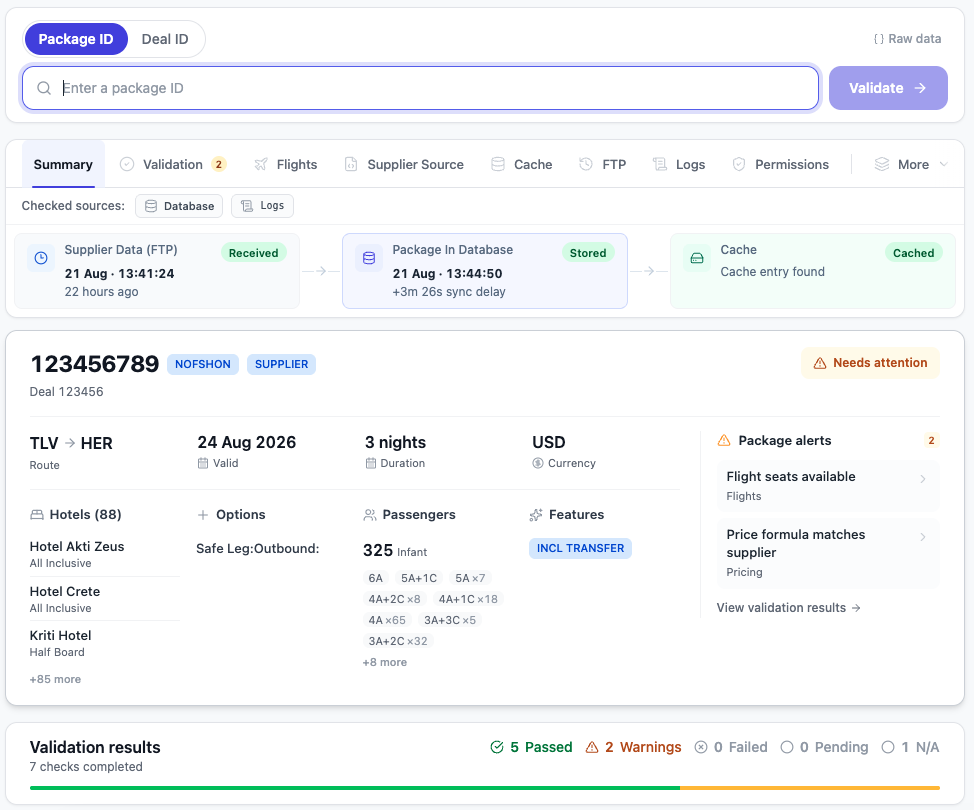
Package validation & investigation
A production validation tool that checks travel package data across multiple system sources and brings the evidence needed to investigate inconsistencies into one place.
Built around
Validate
Compare package data across system sources
Correlate
Connect database, cache, logs and external APIs
Investigate
Correlate evidence and support root-cause analysis
VALIDATIONSYSTEM DATAAI AGENT
QA Automation
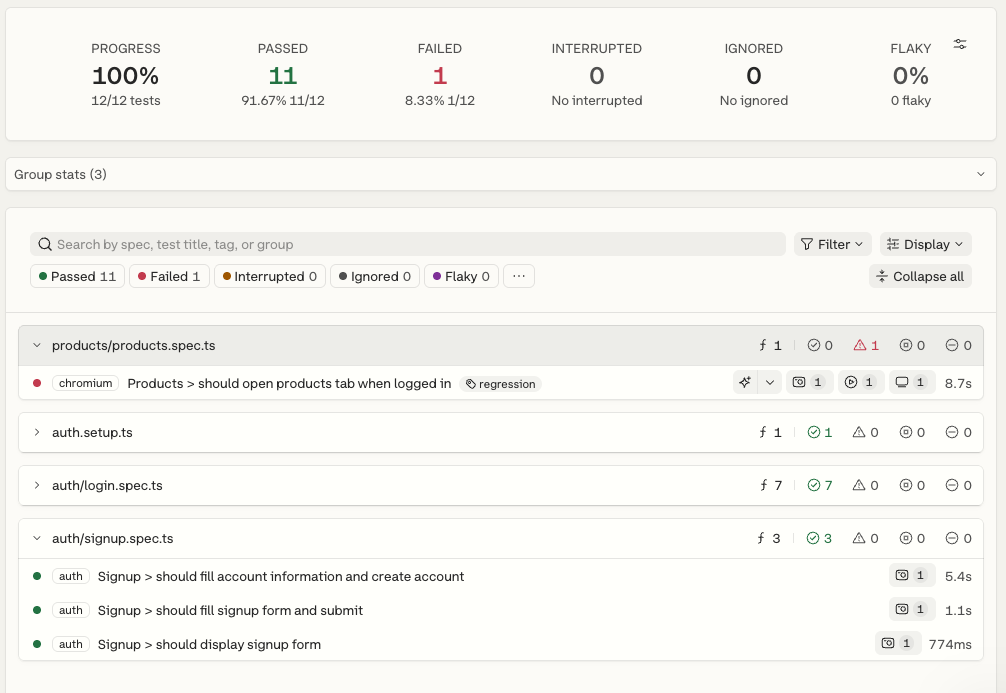
End-to-end test automation
A Playwright automation setup covering critical UI and API flows, with CI execution and centralized reporting for test results, history and failure analysis.
Built around
Coverage
Critical UI, API and end-to-end flows
Execution
Automated runs through CI/CD
Visibility
Centralized results, history and failure analysis
PLAYWRIGHTAPICURRENTS
Where I usually step in
When teams need help
Common problems I step into.
Critical flows still depend on manual regression
Important product paths are still checked by hand, so every release is slower and riskier than it should be.
Critical flows should not wait on a manual pass.
swipe to see more
Automation exists — coverage is falling behind
The product keeps moving, but new flows stay untested and regression coverage no longer matches what ships.
Coverage should keep up with development.
Tests are unstable, flaky or hard to maintain
Failures are noisy, updates take too long, and the team starts trusting the suite less.
Automation should reduce maintenance, not create it.
Nobody clearly owns execution and maintenance
Tests exist, but failures sit unattended and the framework does not have a clear owner.
Automation needs someone to keep it running.
Failures take too much manual investigation
A failing test is only the start. Understanding why still means digging through logs, APIs and system data by hand.
Faster root cause means faster recovery.
Ways to engage
Ways to work together
Test automation or operational tools — delivered as a focused project or supported over time.
Service area
Project
Automation Delivery
I scope, build and hand over a working automation suite — then your team runs it.
Best for
Teams starting automation, rebuilding an existing suite, or expanding coverage.
You get
A running suite in your CI, clear reporting, docs & a walkthrough.
Project
Operational Tool Delivery
I turn a manual or scattered technical workflow into a working internal tool.
Best for
Repetitive work living in scripts, spreadsheets or one person’s head.
You get
A working tool integrated with your systems, documented and handed over.
Ongoing
Automation Ownership
I run, fix and extend your automation, so your team gets the signal without the upkeep.
Best for
Teams that want reliable automation without a dedicated automation engineer.
You get
Stable runs, investigated failures and coverage that keeps up.
Ongoing
Operational Tool Ownership
I maintain and extend the tool as your systems, data and workflows evolve.
Best for
Internal tools the team relies on and needs to keep evolving.
You get
Ongoing maintenance, fixes, features and integrations.
Getting started
Before you decide
01
Assess
I review your product, current setup and the problem you want to solve, and find where to start.
02
Sample solution
I introduce the approach through a small working sample, so you see it in practice first.
Your call
03
Move forward
If it’s a fit, I take it forward in the model that suits you.
ProjectOngoing
Experience
2022–2025Applitest
Automation Specialist & Group LeaderScale
Led customer-facing automation initiatives and offshore teams — replacing manual QA with production automation systems that ran reliably at scale.
2020–2022Camilyo
Automation Team LeaderAutomation
Built and integrated automation into CI/CD — reducing manual testing and enabling faster, more reliable releases.
2013–2020Amadeus Israel
System QA & API AutomationSystems
Worked deep in production systems — debugging logs, data flows, and business logic — turning critical failures into stable, reliable flows.
2011–2013Fanzila
QA LeadQA
Established QA processes that supported consistent product delivery across web systems.
Let’s talk
Test automation or operational tools — a focused project or ongoing support
Tell me the product area, workflow or tool that needs work. From there, I’ll shape a focused project or ongoing support.